The Allure of the Milky Springs: Finding Serenity in Nature’s Secret Spa
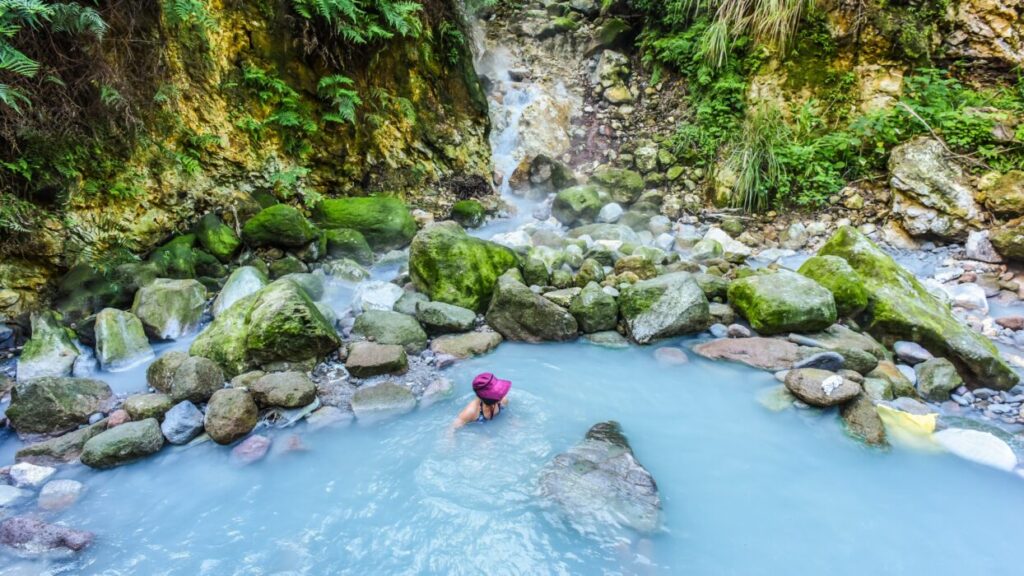
Hidden away from the neon lights of the city and the hum of modern machinery lies a sanctuary that feels as though it were plucked from a dream. The image of a solitary traveler wading through opaque, milky-blue waters, surrounded by moss-covered stones and lush greenery, captures more than just a moment—it captures the essence of geothermal rejuvenation. These “milky springs” are one of nature’s most peculiar and beautiful phenomena, offering a sensory experience that balances raw geological power with profound tranquility.
A Geological Masterpiece: The Science Behind the Blue
To the uninitiated, the striking turquoise or milky-white hue of the water might look artificial, but it is entirely a product of the Earth’s chemistry. This phenomenon typically occurs in volcanic regions where groundwater is heated by underlying magma. As the water rises through the crust, it dissolves minerals, most notably silica and sulfur.
When the silica-rich water cools slightly upon reaching the surface, the mineral particles begin to suspend themselves in the water. These particles scatter sunlight in a way that reflects the vibrant blue spectrum—a process known as Rayleigh scattering. The result is a pool that looks like a liquid opal, nestled against the rugged, dark textures of the volcanic rock.
The Therapeutic Embrace of the Wild
Stepping into a natural hot spring is a far cry from a visit to a sterile, chlorinated spa. The person in the image, partially submerged and wearing a simple hat to shield against the mountain mist, is participating in an ancient ritual of balneotherapy. For centuries, cultures around the world have sought out these mineral-rich waters for their purported healing properties.
-
Sulfur: Known for its “rotten egg” scent, it is highly regarded for its ability to soothe skin conditions like psoriasis and eczema.
-
Heat: The natural warmth of the spring promotes vasodilation, increasing blood flow and relaxing overworked muscles.
-
Silica: This mineral is often credited with softening the skin, leaving a silky residue that acts as a natural exfoliant.
The Silent Language of Moss and Stone
The aesthetic appeal of these springs is amplified by their surroundings. In the image, the contrast is striking: the vivid green moss clinging to the boulders signifies a high-moisture environment, creating a vibrant frame for the pale blue water. This is a landscape in constant flux. The steam rising from the background suggests a “living” earth, where heat is still being generated just beneath the surface.
For the traveler, this environment demands a certain level of mindfulness. The rocks are often slippery, the temperature can shift with the current, and the air is thick with the scent of minerals. It forces a person to be present in the moment, focusing on the sensation of the water and the sound of the nearby trickle from the cliffs.
Preserving the Untouched
As beautiful as these locations are, they are delicate ecosystems. The influx of tourism into remote geothermal areas poses a risk to the fragile moss and the purity of the water. “Leave No Trace” principles are essential here; even the oils from human skin or the chemicals in sunscreen can alter the local chemistry over time.
Finding a spot like the one pictured—isolated, quiet, and pristine—is becoming a rare privilege. It serves as a reminder that the most https://www.blackparkspa.com/ luxurious experiences on Earth aren’t found in five-star hotels, but in the rugged, unpolished corners of the natural world where the Earth’s inner warmth meets the cool mountain air.
Whether you are looking for physical healing or a mental reset, the milky springs offer a profound connection to the planet, proving that sometimes, the best way to move forward is to simply sit still in a pool of blue.